

Articles
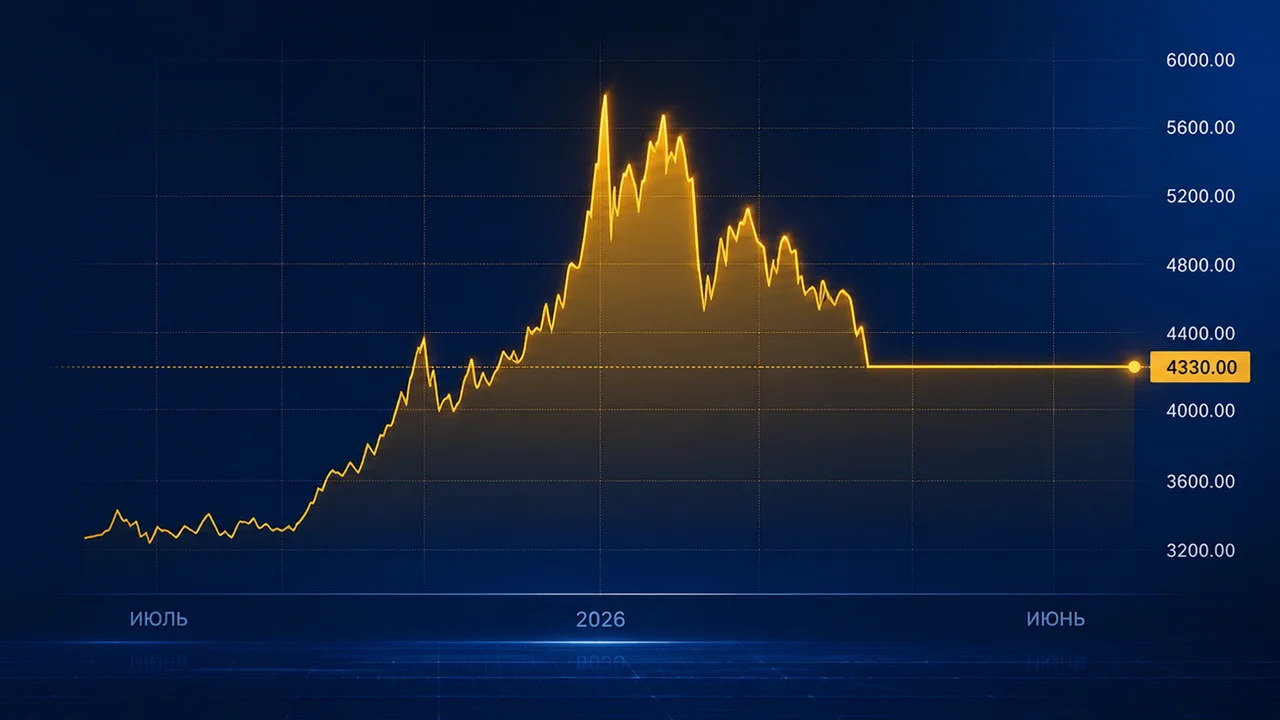
DESPITE FALLING DEMAND, GOLD COULD RISE 43% — METALS FOCUS FORECAST
According to the annual Gold Focus 2026 report by London-based Metals Focus, the average gold price in 2026 could reach $4,920 per ounce — 43% above last year's average. The forecast is non-trivial: analysts expect total demand to fall 2.3% while supply rises 3.1%, with physical investment overtaking jewellery as the largest market segment for the first time.
By Dan Vastrik, 09 June 2026
How the Structure of Demand Is Changing
The structure of global gold demand continues to shift. In 2026, total demand is forecast by Metals Focus to fall by 2.3%, yet within the market the divergence between consumer and investment segments is set to widen.
- Jewellery demand: high prices continue to weigh on consumption. After last year's decline, global demand for gold jewellery is expected to contract by a further 11%.
- Investment demand: the weaker appetite from the jewellery sector is, in the agency's view, largely offset by rising purchases of bars and coins.
- Structural shift: physical investment in gold may, for the first time, overtake the jewellery sector and become the largest single component of global demand.

The Supply and Demand Balance in 2026
How the global gold market is structured
To understand why the gold price can rise even as total demand declines, it helps to view the market as a system of two parts: supply and demand. On one side, metal reaches the market through mining and recycling. On the other, it is bought by investors, the jewellery industry, central banks, exchange-traded funds and technology companies. In 2026 it is not so much the overall size of the market that changes as its internal structure.
Global gold supply in 2026 (forecast)
| Supply sector | Volume in 2026 (tonnes) | Change vs 2025 (tonnes) | Change (%) | Share of supply (%) | Key features and triggers |
|---|---|---|---|---|---|
| Mine Production | 3,907 | +90 | +2.4% | 74.2% | An all-time high for mine output. Growth is seen across almost every region of the world except Europe and Oceania. All-in sustaining costs (AISC) rose to $1,552/oz. |
| Recycling (Scrap) | 1,355 | +65 | +5.1% | 25.8% | High prices support stronger recycling, though the supply of scrap remains constrained. |
| Total supply | 5,262 | +155 | +3.1% | 100% | The physical volume of the market expands, creating additional liquidity for large buyers. |
Global gold demand in 2026 (forecast)
| Demand sector | Volume in 2026 (tonnes) | Change vs 2025 (tonnes) | Change (%) | Share of demand (%) | Key features and triggers |
|---|---|---|---|---|---|
| Bars and Coins (Physical Investment) | 1,535 | +285 | +22.8% | 29.2% | The largest demand segment of 2026. Growth is driven primarily by purchases of physical metal in Asia. |
| Jewellery Fabrication | 1,465 | −181 | −11.0% | 27.8% | High prices keep pressing on physical consumption. Demand shifts toward lighter pieces and lower purities. |
| Central Banks (Official Sector Purchases) | 740 | −108 | −12.7% | 14.1% | Purchases ease from the abnormally high levels of recent years but remain well above long-run historical averages. |
| ETF & Institutional (OTC) | 1,440 | −152 | −9.5% | 27.3% | The segment stays volatile: inflows in some regions can be accompanied by outflows in others as rate and dollar expectations fluctuate. |
| Technology & Industrial | 82 | +1 | +1.0% | 1.6% | A small but stable segment tied to electronics, industry and high-tech components. |
| Total demand | 5,262 | −124 | −2.3% | 100% | Despite the decline in physical volumes, the aggregate value of demand can stay elevated thanks to the price factor. |
The key takeaway: the structural shift in demand becomes visible in absolute numbers
Absolute figures make the Metals Focus forecast clearer. The increase in supply from mining and recycling — around 155 tonnes — looks modest against the changes in the demand structure. The 181-tonne fall in jewellery demand and the more restrained central-bank buying effectively free up volume that the market redirects into the investment segment.
The report's central thesis is that in 2026 demand for bars and coins could exceed 1,500 tonnes. If that scenario plays out, physical investment will become the largest demand segment for gold for the first time, overtaking jewellery consumption. For the market this is an important signal: even with weaker consumer demand, physical metal keeps finding a steady buyer in the investment segment.
A Historic Change in the Structure of Demand
It is at this point that the central shift of 2026 becomes visible: physical investment demand begins to play a more important role for the market than traditional jewellery consumption. For producers and traders this means that the market balance is increasingly defined by investor behaviour, not by end-consumer demand alone.
Cost of production
According to Metals Focus, global all-in sustaining costs (AISC) of gold mining rose by 12% over the last reporting period, reaching $1,552 per troy ounce. This reflects a broad rise in operating costs across the industry, despite higher revenue on the back of elevated gold prices.
What Supports the Gold Forecast
Metals Focus acknowledges that, in the short term, gold remains sensitive to expectations on rates, the dollar and geopolitical events. In its base case, however, the agency assumes that the fundamental factors that supported the market in 2025 will persist into 2026.
Among these factors are continued uncertainty in US economic policy, investor appetite for safe-haven assets, concerns about the long-term resilience of the dollar, and elevated geopolitical risk. In such a configuration, gold continues to serve as a tool for diversification and hedging.
Key factors for 2026
Analysts highlight several factors that may keep supporting the gold market:
- High uncertainty in US domestic and foreign policy;
- Long-term systemic concerns about the resilience and purchasing power of the dollar;
- Persistently high geopolitical risk (the Middle East, Eastern Europe);
- Clearly stretched and extreme valuations across global equity markets (stretched equity valuations).
Conclusion: if the Metals Focus forecast proves correct, 2026 will mark an important milestone for the gold market — not only because of a new price benchmark, but because of the change in the structure of demand. The main buyer of metal in the physical segment may be private investors using gold as a protective asset, rather than jewellers. For producers this means sustained high margins even as costs rise, and for jewellery consumers it means continued pressure from high prices.
Sources:
- Metals Focus. Gold Focus 2026.
- World Gold Council. Gold Demand Trends: Q4 and Full Year 2025.
- World Gold Council. Gold Demand Trends: Q1 2026 Outlook.