

Articles
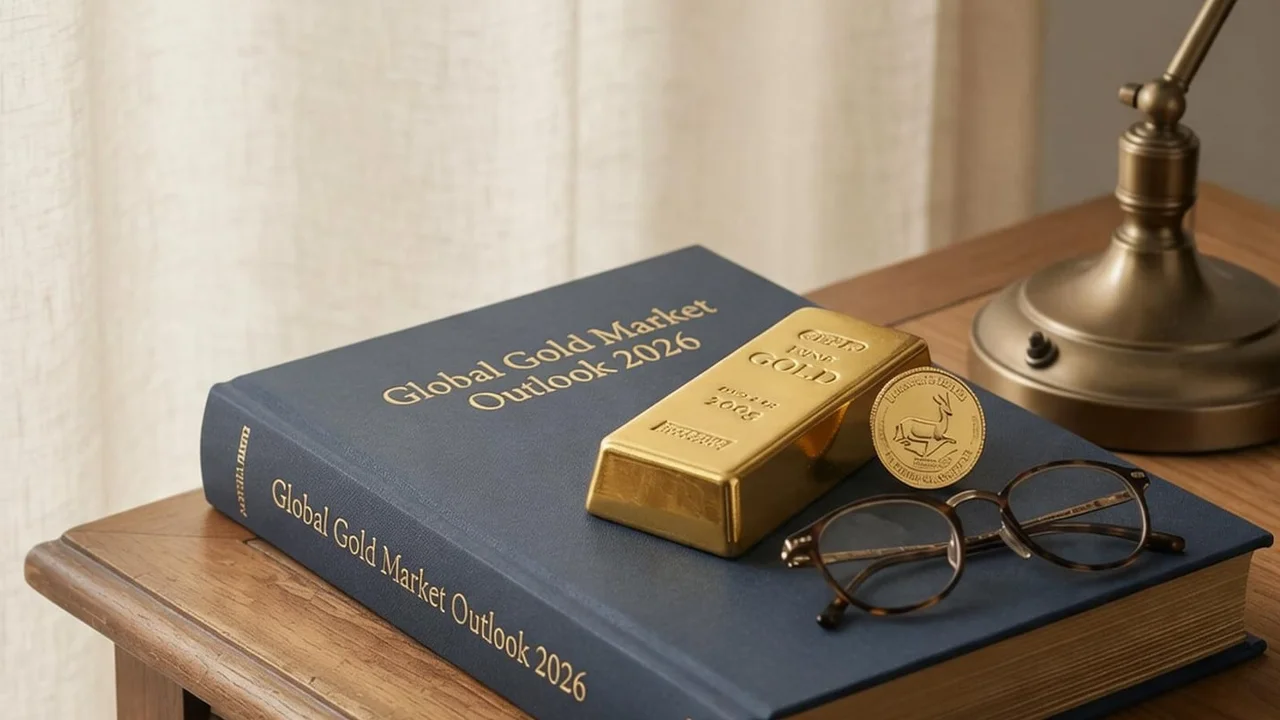
IN GOLD WE TRUST 2026: WHY INCREMENTUM RAISED ITS GOLD TARGET TO $8,900
Every May, a four-hundred-and-fifty-page document appears in Liechtenstein that seemingly everyone in the gold market reads—and it has done so for twenty years. In 2026, the anniversary edition of Incrementum AG's In Gold We Trust was titled “Back to the Monetary Future,” while the press extracted one number from it: $8,900 per ounce.
By Dan Vastrik, 25.06.2026
Every May, a four-hundred-and-fifty-page document appears in Liechtenstein that seemingly everyone in the gold market reads—and it has done so for twenty years. In 2026, the anniversary edition of Incrementum AG's In Gold We Trust was titled “Back to the Monetary Future,” while the press extracted one number from it: $8,900 per ounce.
I dislike round-number targets circulating without context: they are too easy to quote and too easy to misunderstand. So first the framework, then the number. $8,900 is an alternative, inflationary scenario in Incrementum's model. It is not the base forecast. It is not a promise. It is one calculated outcome under one set of assumptions.
With that framework in place, where did the figure come from, and why does it deserve more attention than an ordinary headline target?
How $4,800 Became $8,900
The story begins in 2020. In that year's “The Golden Decade” report, portfolio managers Ronald-Peter Stöferle and Mark Valek presented a model that calculates the gold price under different scenarios for money-supply growth and the degree of “gold backing.” Its base case produced $4,800 per ounce by the end of 2030. Against 2020 prices, that looked bold.
The level was reached in 2026—four years ahead of schedule.
“The fact that our conservative target for the end of the decade was reached so early only underscores the strength of current monetary and geopolitical forces,” Stöferle says. Once the base threshold had fallen early, attention shifted to the alternative scenario, in which inflation is higher and currencies lose value faster. Under those assumptions, the model produces $8,900 by the end of the decade.
To state it plainly once more: Incrementum is not saying this will happen. It is showing what the model produces if the inflationary scenario materialises. It is a framework for thought, not a guarantee.
The Remonetisation Thesis: What the Authors Believe Is Driving the Price
Incrementum explains gold's rise not as speculation but as “remonetisation”—the gradual return of a monetary role to the metal. The report identifies four drivers:
- geopolitical fragmentation into competing blocs;
- dedollarisation—a falling share of the dollar in reserves and settlement;
- inflation volatility—not merely high inflation, but unpredictable inflation;
- growing distrust of fiat currencies.
The background to that thesis is striking. Gold set a new all-time high of about $5,595 per ounce in January 2026. According to the report, global debt reached $348 trillion at the end of 2025, while US federal debt exceeded $39 trillion. The authors' logic is that the heavier the debt burden becomes, the stronger governments' incentive to debase their own currencies—and the more attractive an asset with no issuer becomes.
The status of this argument matters: it is the interpretation of one research house. A strong interpretation, refined over twenty years, but an interpretation rather than an established fact.
“A Party Where the First Guests Are Only Beginning to Arrive”
The report's most underrated thesis is not about price at all. It is about positioning.
Incrementum estimates that privately held gold represents just 2.7% of global financial assets. Of every hundred dollars of private financial wealth, less than three dollars is held in gold. In other words, all the growth of recent years occurred with private portfolios barely participating. In the authors' words, gold is anything but a crowded trade; it is a party where the first guests are only beginning to arrive.
This also underpins their long-running disagreement with the classic 60/40 portfolio—60% equities, 40% bonds. In an environment where shares and bonds can fall together, Incrementum argues that gold is increasingly assuming the role of diversifier. The firm's position has been consistent for years; it is presented here expressly as their position.
Incrementum's Model Scenarios at a Glance
| Measure | Value | Status |
|---|---|---|
| Base scenario (2020) | $4,800 by end-2030 | Reached early in 2026 |
| Alternative (inflationary) | $8,900 by decade-end | A model scenario, not a promise |
| Record price | ~$5,595/oz (January 2026) | Fact |
| Private investors' gold allocation | ~2.7% of financial assets | Incrementum estimate |
| Global debt / US federal debt | $348tn / >$39tn | Report data |
Key Factors
Incrementum builds its thesis on four arguments:
- The base target was reached early—the process is moving faster than the model originally assumed.
- Debt dominance—servicing record debt creates an incentive for inflation.
- Low portfolio allocation to gold—potential demand if that allocation rises by even one percentage point.
- Central-bank demand—the official sector has bought gold for 15 consecutive years, according to the World Gold Council.
Conclusion
In Gold We Trust 2026 is the detailed view of one respected research house, not a market consensus. Its headline figure should be read exactly as the authors present it: $8,900 is an alternative inflationary model scenario, not a forecast or promise. The report's real value lies elsewhere—it explains why gold is once again being discussed in monetary terms, not merely as an investment. Agreement is optional. Knowing the arguments is useful: the market has tested them for twenty years, and so far the score favours the authors.
This material is for educational purposes only and is not investment advice. The forecasts cited are scenarios developed by third-party analysts, not guarantees. Gold prices can move in either direction, and past performance does not guarantee future results.
In Brief: Frequently Asked Questions
What is the In Gold We Trust report? It is an annual study of the gold market published by Liechtenstein-based Incrementum AG and written by Ronald-Peter Stöferle and Mark Valek. The 2026 edition—the twentieth anniversary report—is titled “Back to the Monetary Future” and runs to roughly 460 pages.
What gold outlook does Incrementum give? The model's base target of $4,800 per ounce by 2030 was reached early, in 2026. The authors now highlight an alternative inflationary scenario of $8,900 per ounce by the end of the decade. It is a model scenario, not a promise.
What does the $8,900 target mean? It is the result produced by Incrementum's model under assumptions of higher inflation and further currency debasement. It is neither the base forecast nor a guarantee—only one modelled outcome.
Why does Incrementum consider gold underowned? The firm estimates that privately held gold accounts for only about 2.7% of global financial assets. In the authors' view, that means demand remains far from overheated. This is Incrementum's interpretation.
Sources
- Incrementum AG. In Gold We Trust Report 2026 — “Back to the Monetary Future” — model scenarios ($4,800 / $8,900), the remonetisation thesis, the 2.7% estimate and debt data. A free Compact Version is available at ingoldwetrust.report.
- Kitco News. Gold's 'golden decade' enters next phase with new $8,900 target — In Gold We Trust Report (21 May 2026) — a review of the report and quotations from its authors.