

Articles
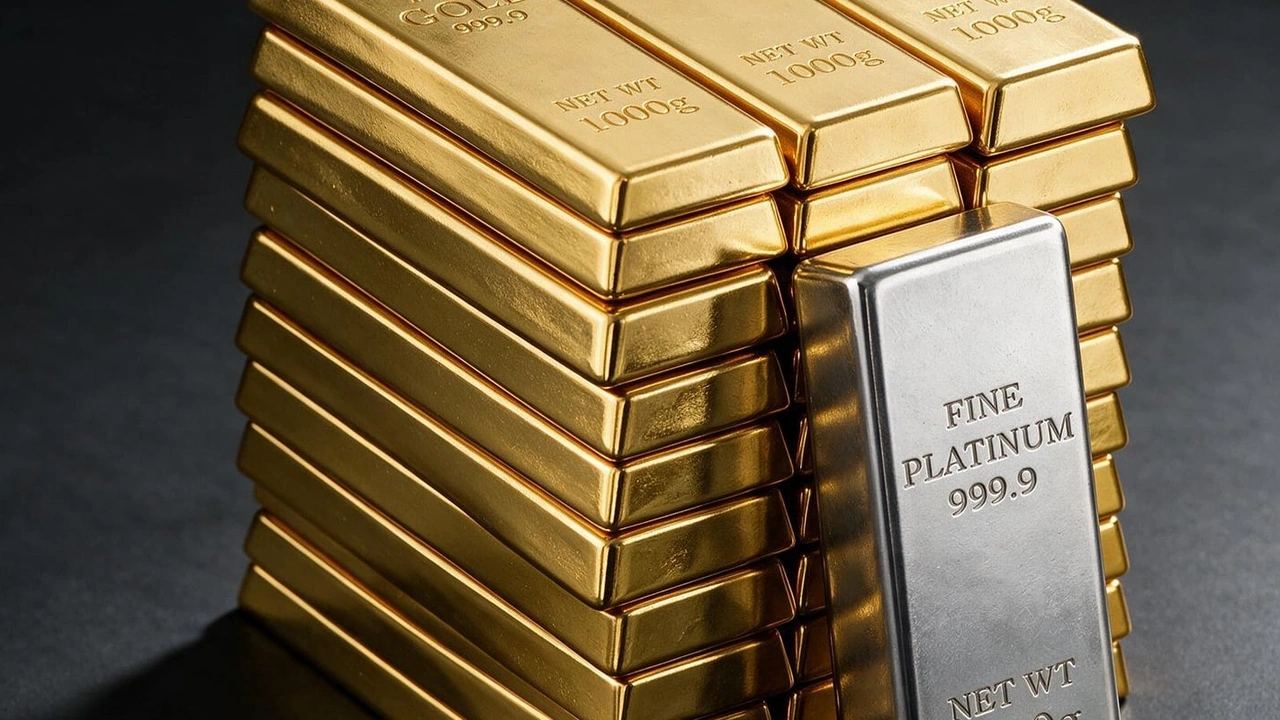
NEARLY 20 TIMES AS MUCH GOLD AS PLATINUM IS MINED. THIS IS NOT A PRICE FORMULA
Annual platinum mine output is far lower than gold's, but output alone does not determine price. Industrial demand, recycled supply and changes in market stocks also matter.
Annual Production Ratio

Rounded mine-production estimates for 2025. Source: USGS, MCS 2026, v1.3 (May). Platinum is converted from 170,000 kg to 170 tonnes; the 3,300/170 ratio is calculated by the editors. Annual output is not crustal abundance or an estimate of fair value. Data CSV.
A direct comparison of production volumes reveals a significant difference between the two metals. The U.S. Geological Survey (USGS) estimated global gold mine production in 2025 at 3,300 metric tons USGS MCS 2026. For the same period, platinum mine production was estimated at 170 metric tons USGS MCS 2026.
A calculation based on these estimates shows that in 2025, approximately 19.4 times more gold was mined than platinum. However, this ratio only reflects the annual flow of new metal, not its total reserves or market availability.
What the Production Ratio Doesn't Reveal
The annual production figure cannot be directly extrapolated to geological reserves. In the USGS MCS 2026 table, reserves are listed for platinum-group metals (PGMs) as a whole, not for platinum separately. Therefore, this column does not allow for a comparable ratio of gold to platinum reserves USGS MCS 2026.
Thus, the 19.4-to-1 ratio is a comparison of flows, not of the total volumes of metal in the Earth's crust. It does not account for the metal that has already been mined and is in circulation.
How Metal Enters the Market
Newly mined metal is not the only source of supply. Analysts, such as Johnson Matthey, divide it into two key components:
-
Primary supply. This refers to the annual sales by mining companies. This figure may differ from the actual mining output if companies sell metal from their inventories or, conversely, build them up Johnson Matthey.
-
Secondary supply. In Johnson Matthey's methodology, this includes metal from open-loop recycling—such as from automotive catalysts—that enters the market. Closed-loop recycling, where metal is returned to the same production cycle, is not included in this figure Johnson Matthey.
In Johnson Matthey's balance, the total annual supply is the sum of primary and secondary flows. This is an accounting figure, not a volume that can be purchased from stock at any given moment.
Industrial Applications Shape Demand
Industrial applications are crucial for the platinum market. The metal's physical and chemical properties explain its use in several industries.
Platinum is used in automotive catalysts to purify exhaust gases, in oil refining, the chemical industry, and jewelry USGS. Therefore, its price depends on the health of these sectors, technological cycles, and regulatory requirements, not just on its physical rarity.
A Deficit Describes a Market Balance, Not a Price Forecast
A market deficit does not always lead to a price increase. In its forecast from May 14, 2026, Johnson Matthey expects the platinum market to face a deficit for the fourth consecutive year. According to this forecast, the deficit will persist even with an 8% decrease in aggregate demand Johnson Matthey.
A deficit, in this context, means that annual demand exceeds the annual supply recorded in this balance. It does not mean the metal has physically run out. In a balance model, the shortfall must be covered by market stocks, the size of which is not precisely known Johnson Matthey. Thus, the presence of a deficit in the flow balance is not a direct indicator of an inevitable price increase.
Conclusion
The ratio of annual gold to platinum production is just one of many factors influencing the market. This metric cannot serve as the sole basis for assessing a fair price. A full assessment must consider all sources of supply, including recycled metal, as well as patterns of industrial demand.
Any claim about platinum being undervalued or overvalued requires a separate analysis of price series and valuation models, which are outside the scope of this article. This article is for informational purposes only and does not constitute investment advice.