

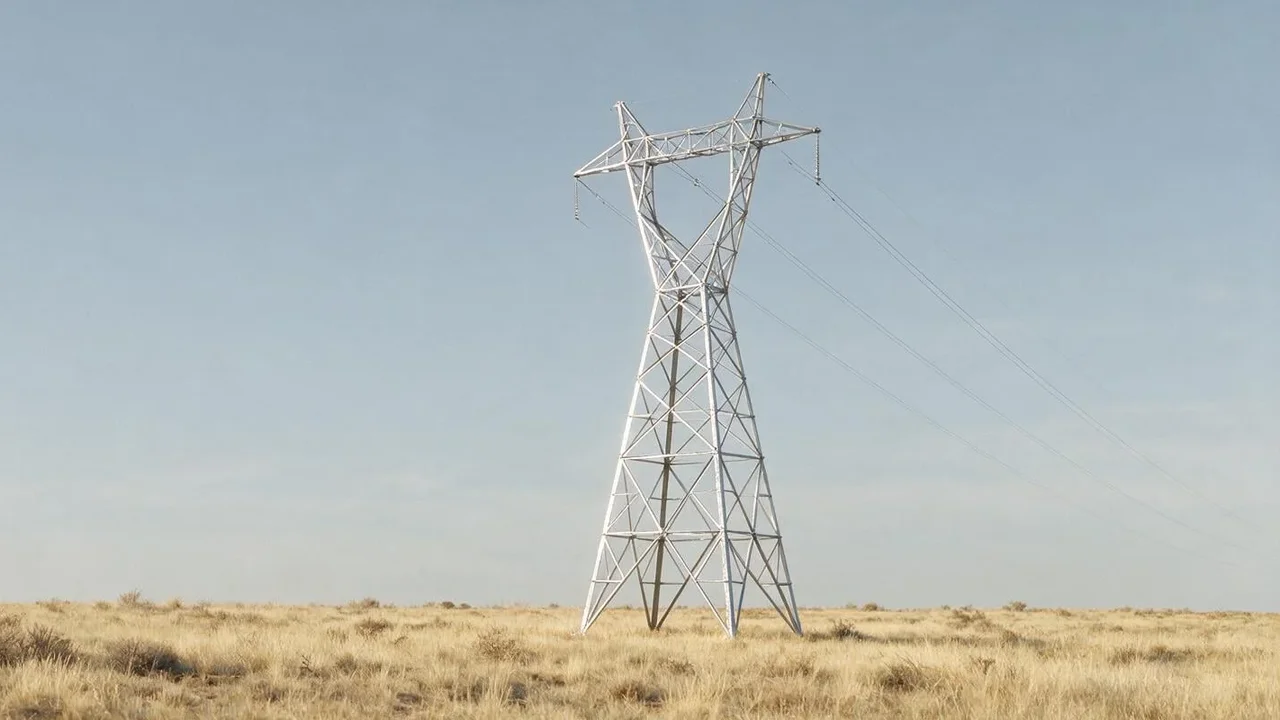
Eskom reported higher availability of its generating fleet from April to August 2026. That matters for South Africa's platinum industry, but does not by itself explain output: maintenance, inventories and conditions at individual operations also matter.
Eskom is South Africa’s state-owned power utility and produces most of the country’s electricity. Its performance matters to the platinum industry because mining, concentration, and smelting of platinum-group metals require reliable power. Better power-station availability therefore reduces system risk, but does not by itself prove that platinum output has increased.
On August 28, Eskom reported that for the financial period from April 1 to August 27, 2026, its Energy Availability Factor (EAF) reached 67.87%. This metric measures the availability of Eskom's generating fleet, not the amount of electricity generated. It was 6.97 percentage points higher than the 60.90% recorded for the same period in 2025 Eskom.
As of August 28, Eskom reported 469 days without system-wide rolling power cuts, known as load shedding. This figure comes from the company's press release and does not imply a complete absence of disruptions for every individual consumer.
Two Observation Windows

Data from Eskom's 28 August 2026 release. EAF is generation-fleet availability, not a measure of supply at each mine. Year-to-date and weekly windows are not joined into one series; both scales are 0–100%. Differences are calculated in percentage points. Data CSV.
However, data for a shorter period paints a different picture. For the week of August 21–27, the EAF was 69.41%, lower than the 70.13% recorded for the same week a year earlier. Eskom attributes this to a larger share of capacity unavailable for planned maintenance (PCLF): 17.18% versus 13.22% in 2025 Eskom.
It is important to distinguish between system-wide power cuts and local restrictions. The absence of nationwide load shedding does not mean a complete end to disruptions. The company continues to implement load reduction—reducing load to protect overloaded local networks—which can affect individual consumers Eskom.
What This Means for the Platinum Market
A stable power supply is crucial for South Africa's platinum industry. According to U.S. Geological Survey (USGS) estimates for 2025, the country's platinum mine production was 120,000 kg out of a global total of 170,000 kg, or about 70.6% USGS. The energy-intensive processes of mining, concentration, and smelting make the industry highly dependent on grid reliability.
Production reports illustrate why energy and metallurgical figures cannot be equated. In its results for the first half of 2026, published on July 29, Valterra Platinum reported a 25% increase in refined production from its PGM basket to 1.7 million ounces. Metal in concentrate from the same basket rose by 4% to 1.5 million ounces. The company's basket also includes gold, so these figures should not be interpreted as pure platinum volumes. Furthermore, the first half of the year and the April–August period in Eskom's report are different time frames.
The company attributes this performance to several factors: the recovery of the Amandelbult mine after the 2025 floods, inventory optimization, and the postponement of some planned processing facility maintenance to the third quarter. These explanations do not establish how much, if any, of the increase came from changes in electricity supply Valterra Platinum.
Electricity Procurement and Costs
Valterra reported purchasing approximately 181 GWh of renewable electricity in the first half of 2026. The company estimates this resulted in savings of about 36 million rand compared to electricity supplied by Eskom. This refers to purchases under a long-term agreement with Envusa and does not prove the complete energy independence of its operations Valterra Platinum results, "Climate and environment" section.
Valterra's all-in sustaining costs (AISC) for the first half of the year were $996 per 3E ounce sold. The 3E basket comprises platinum, palladium and rhodium. The calculation includes sustaining capital expenditure and credits for revenue from other metals; it is not simply a measure of cash operating costs. This figure is specific to one company and does not represent the average cost of pure platinum production for the entire South African industry Valterra Platinum results, AISC calculation.
Future reports will help compare changes in output, maintenance and costs. But even if EAF and production both rise, that alone would not establish a causal link. Assessing such a link would require data on electricity supply to individual facilities and other factors affecting their operations.
This material is for informational purposes only and does not constitute a personal investment recommendation.